You’re here for a reason. Your POST request to Edamam’s Nutrition Analysis API just returned a response that felt… incomplete. You searched for a product by UPC, and the allergen list looked suspiciously short. You tried to filter for products without artificial sweeteners, and you realized there was no parameter for it. You’ve hit the ceiling.
That ceiling is a familiar place for ambitious health-tech platforms. You started with Edamam because it was accessible and handled the basics: parsing a recipe URL, calculating macros, and providing a baseline of nutritional data. It got your MVP off the ground. But now, your users are more sophisticated. Your product roadmap is more demanding. Your brand’s credibility is on the line.
Your users aren’t just counting calories anymore. They’re scanning labels for sucralose, demanding to know if a product is certified Halal, and trusting you to protect their children from a life-threatening sesame allergy. Basic macro data is a commodity. The real, defensible value lies in the nuance—the deep, verified, and structured data that answers the questions modern consumers are actually asking.
This isn’t just about finding a replacement for Edamam. It’s about upgrading your entire data infrastructure to meet the demands of the modern health-conscious consumer. This is a brutal, technically honest guide for CTOs, lead developers, and founders who are ready to make that leap. We’ll dissect Edamam’s limitations, build a framework for choosing a true enterprise-grade alternative, and show you exactly why platforms serious about health and personalization are moving to a new class of food data API.
What Edamam Does Well
Let’s be fair. Edamam didn’t become a popular choice by accident. For a certain class of application, it’s a perfectly adequate tool. If you’re building a simple recipe blog or a first-generation calorie counter, their service offers a few key strengths:
-
Recipe Analysis: Their Natural Language Processing (NLP) for recipes is mature. You can throw a block of text or a URL at their
/api/nutrition-detailsendpoint, and it does a commendable job of parsing ingredients and quantities to estimate the nutritional profile. It’s a powerful feature for getting a quick, ballpark analysis of user-generated content. -
Broad Food Database: For basic food lookups, their database is extensive. It aggregates data from various sources, including the USDA, which gives them coverage for a wide range of generic ingredients and branded products.
-
Basic Nutritional Data: Edamam reliably returns the core macronutrients (protein, fat, carbohydrates) and a standard set of micronutrients (vitamins and minerals) that you’d find on a typical nutrition label. For V1 of a nutrition app, this is often sufficient.
Think of Edamam as the foundational layer. They provide the nutritional equivalent of a low-resolution map. It’s great for getting your general bearings, but it’s dangerously insufficient when you need to navigate complex, high-stakes terrain.
Where Edamam Falls Short: The Technical Limitations That Force a Switch
The frustration you’re feeling isn’t a bug; it’s a feature of their data model’s limitations. When your product’s success depends on data precision, liability management, and deep user personalization, Edamam’s blind spots become critical failures.
CRITICAL FLAW #1: The Allergen Ceiling is Dangerously Low
This is, without a doubt, the most common reason developers migrate. Edamam’s allergen labeling is primarily based on the 14 major allergens designated by the EU. These are: Celery, Cereals containing gluten, Crustaceans, Eggs, Fish, Lupin, Milk, Molluscs, Mustard, Nuts, Peanuts, Sesame seeds, Soya, and Sulphur dioxide.
On the surface, this seems reasonable. But for a modern health application targeting a global or safety-conscious audience, it’s wholly inadequate:
-
Lack of Granularity: The label “Nuts” is a perfect example. Is it an almond? A walnut? A cashew? For a user with a specific tree nut allergy, this ambiguity is a deal-breaker. A robust API should differentiate and allow filtering for each specific nut.
-
Missing Major Allergens: Corn is a common allergen in North America but is absent from the EU-14 list. As of 2023, Sesame is officially the 9th major allergen in the United States, yet for years it was not a primary, searchable field in many basic APIs.
-
No Cross-Contamination Data: This is a massive liability. A product may not contain peanuts as an ingredient, but was it processed in a facility that also handles peanuts? This information is often printed on physical labels but is absent from simple data models. For a user with a severe allergy, this isn’t a ‘nice-to-have’—it’s life-or-death information. Edamam’s API structure simply doesn’t have a place for this crucial data point.
Your application’s promise of safety is only as good as the data you serve. Relying on a 14-item checklist in a world of complex food sensitivities is a technical debt that can have devastating consequences.
CRITICAL FLAW #2: The “Clean Label” Blind Spot
The “clean label” movement is no longer a niche trend; it’s a primary driver of consumer purchasing decisions. Your users want to know what’s not in their food. They want to filter out:
- Artificial Sweeteners (Aspartame, Sucralose, Acesulfame K)
- Artificial Colors (Red 40, Yellow 5)
- Preservatives (Nitrates, BHT, Sodium Benzoate)
- Thickeners and Gums (Carrageenan, Xanthan Gum)
- High Fructose Corn Syrup
Edamam’s API has no concept of a “clean label score.” You cannot query for &excluded_ingredient_type=artificial_sweetener. You would have to pull the entire ingredient list for every product and run your own string-matching logic—a brittle, inefficient, and perpetually out-of-date solution.
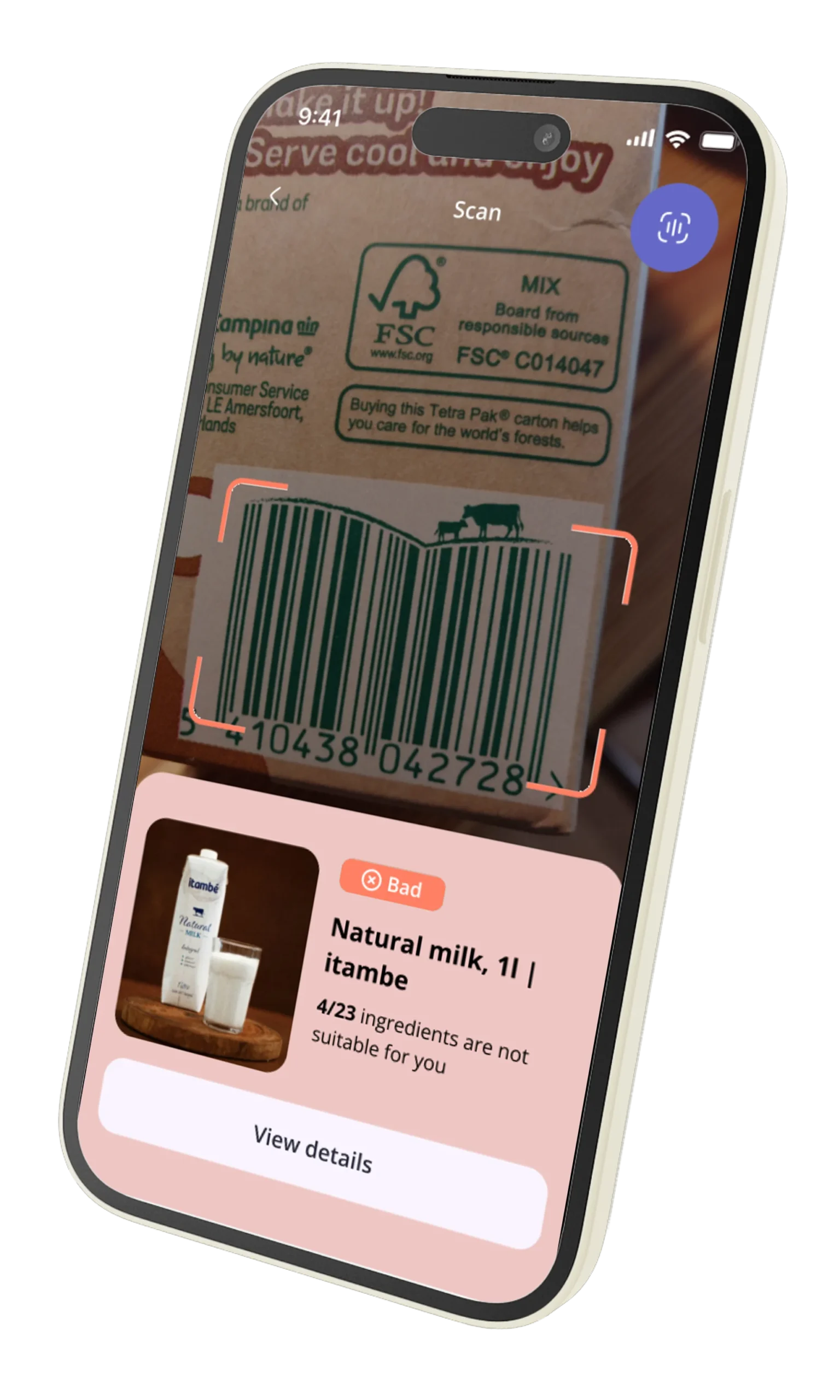
A truly intelligent food API provides this as a first-class data citizen. It should return a simple boolean contains_artificial_sweeteners or, even better, a calculated clean_label_score with a breakdown of offending ingredients. This empowers you to build the powerful, trust-building filters that users now expect.

CRITICAL FLAW #3: Ignoring Religious and Lifestyle Compliance
Dietary choices are deeply personal and often rooted in religious or ethical beliefs. Millions of consumers actively seek out products that are certified Kosher, Halal, or adhere to principles like Jainism. These are not just tags; they represent massive, loyal, and often underserved markets.
Edamam’s data model largely ignores these critical compliance certifications. By not providing verifiable data on whether a product is certified Halal or Kosher, you are actively excluding entire demographics from your platform. This isn’t just a feature gap; it’s a market opportunity cost. A superior API doesn’t just provide nutritional data; it provides cultural and compliance data, allowing you to serve a truly global and diverse user base.
What to Look for in an Edamam Alternative
When you’re evaluating a new food data API, you’re not just buying access to a database. You’re choosing a data partner. Your evaluation criteria must be rigorous and focused on the limitations you’ve already experienced. Here is your technical checklist:
-
Data Granularity & Provenance: Where does the data come from? Is it scraped from websites, crowdsourced, or ingested directly from manufacturers? Demand transparency. An enterprise-grade API should have direct relationships with brands and a clear process for data verification, ideally involving registered dietitians.
-
Comprehensive Allergen & Sensitivity Tagging: Go beyond the EU-14. Does the API explicitly tag for all 9 major US allergens? Does it differentiate between 10+ types of tree nuts? Does it include flags for corn, sulfites, and other common sensitivities? Most importantly, does it provide a separate, queryable field for
cross_contamination_risk? -
Actionable Lifestyle & Diet Intelligence: Look for more than just a
veganorketotag. Does the API provide a calculated score? Can it explain why a product is or isn’t keto-friendly (e.g.,net_carbs > 20g)? Does it have robust support for dozens of modern diets like Paleo, Whole30, Low FODMAP, etc.? -
Clean Label and Compliance Attributes: This is non-negotiable. The API must have queryable boolean fields or tags for
is_organic,is_non_gmo,contains_artificial_colors,is_kosher_certified,is_halal_certified, etc. This data should be structured, not just buried in an ingredient string. -
Superior Developer Experience (DX): How good is the documentation? Is it interactive? Is the API truly RESTful with predictable resource URLs? What is the median and p95 latency? Are there official client libraries for your stack (e.g., Python, Node.js)? A great API feels effortless to integrate.
-
Scalability and Reliability: What are the rate limits? What is their uptime SLA? Do they have a status page? You are building a business on this infrastructure; it needs to be as reliable as your own.
NutriGraphAPI vs Edamam: A Head-to-Head Technical Comparison
Talk is cheap. Let’s look at the data. This is how NutriGraphAPI was architected from the ground up to solve the very problems that Edamam’s model cannot.
| Feature | Edamam API | NutriGraphAPI |
|---|---|---|
| Allergen Coverage | 14 (EU Major Allergens) | 39+ (All US/EU majors, specific tree nuts, corn, sulfites, mustard, etc.) |
| Cross-Contamination Flags | ❌ Not Available | ✅ cross_contamination_allergens: ["Peanut", "Soy"] |
| “Clean Label” Score | ❌ Not Available | ✅ clean_label_score: 85/100 with breakdown |
| Artificial Ingredient Flags | ❌ Not Available | ✅ contains_artificial_sweeteners: true, offending_ingredients: ["Aspartame"] |
| Religious Compliance | ❌ Not Available | ✅ certifications: ["Certified Kosher", "Certified Halal"] |
| Jain Diet Compliance | ❌ Not Available | ✅ tags: ["jain_friendly"] (flags for no root vegetables, etc.) |
| Dietary Profile | Basic tags (Vegan, Vegetarian) | ✅ 50+ profiles (Keto, Paleo, Whole30, Low FODMAP, etc.) with compliance scoring |
| Primary Data Source | NLP Analysis, Public Databases | ✅ Direct Manufacturer Data Feeds, CPG Partnerships, Dietitian-Verified |
| Data Update Cadence | Unspecified | ✅ Real-time for partnered brands, weekly audit cycle |
| Multi-Tag Boolean Search | Limited | ✅ Full support e.g., tags=gluten_free,vegan&logic=AND |
| API Architecture | REST-like | ✅ True RESTful & GraphQL endpoints available |
| Interactive API Docs | Basic | ✅ Full OpenAPI/Swagger documentation with live testing |
This isn’t an incremental improvement. It’s a generational leap in data depth and structure. With NutriGraphAPI, you move from parsing strings to querying rich, structured objects. The features that you’d have to spend months building and maintaining yourself—like an artificial ingredient detector or a cross-contamination logic engine—are now a single API call away.
Other Alternatives Worth Knowing
To provide a complete picture, it’s worth acknowledging other players in the space. However, it’s crucial to understand their technical trade-offs, especially regarding data quality.
Spoonacular API
Spoonacular is arguably Edamam’s closest competitor. They have a massive database of recipes and are very strong in recipe-centric applications, meal planning, and food-related content generation. If your primary use case is finding a recipe for chicken parmesan and getting its approximate nutritional info, they are a solid choice. However, for deep, verified product-level data (allergens, clean label, compliance), they suffer from many of the same structural limitations as Edamam. Their data is often aggregated and lacks the verified, manufacturer-direct provenance required for high-stakes health applications.
Open Food Facts & USDA FoodData Central
These are not APIs; they are datasets. Open Food Facts is a crowdsourced project, which makes it an incredible resource for academic research or hobby projects. However, using it in a commercial health application is a massive liability. The data can be inaccurate, out-of-date, or simply incomplete. There is no SLA, no one to hold accountable, and no guarantee of quality. Relying on it for allergen information would be grossly negligent.
The USDA database is authoritative for generic ingredients but has limited and often lagging coverage of branded CPG products. It’s a foundational source, but it’s not a comprehensive, production-ready solution.
Using these sources directly is like choosing to build your own server infrastructure in a public park instead of using AWS. You could do it, but the risks, maintenance overhead, and lack of reliability make it a non-starter for any serious business.
Which API Is Right for Your Project?
Let’s bring it all home. The choice depends entirely on the promise you are making to your users.
If you’re building a simple recipe blog where nutritional information is a casual add-on, and a user mistaking a walnut for a pecan has low consequences, then Edamam or Spoonacular might be sufficient for your needs. They are the entry-level tools for entry-level problems.
But if you are building a serious, venture-backed, or brand-critical health-tech application…
- If your users are trusting you to help them manage a severe food allergy.
- If your value proposition is a personalized meal plan for a complex condition like IBS (requiring Low FODMAP data).
- If your target market is the modern, label-conscious consumer who wants to filter out nitrates, artificial colors, and high fructose corn syrup.
- If you want to serve global audiences who require Kosher or Halal certified options.
…then you haven’t just outgrown Edamam. You’ve graduated to a different class of technical challenge. You need an API partner whose data model was designed for this complexity from day one.
You need structured, verified, and defensible data. You need a partner who treats data quality not as a feature, but as the entire foundation of the product.
The proof is not in a blog post, but in the API response. The difference is not just in the number of data points, but in the confidence you have in their accuracy.
Don’t let an inadequate data layer become the ceiling for your company’s growth.
Start free with NutriGraphAPI and test our latency against your current Edamam key.
We are confident in what you will find. See our plans and get your developer key here: https://nutrigraphapi.com/pricing