The Braiin Limited IPO: Why AgTech is the New AI Frontier
Wall Street has a new language. It’s not spoken in the hushed tones of the trading floor, but in the silent, relentless hum of servers processing petabytes of agricultural data. Last week, this language was translated into a number: $1.7 billion. That’s the market capitalization Braiin Limited ($BRAI), an Australian AgTech firm specializing in IoT and AI, commanded upon its NASDAQ debut via a SPAC merger with Northern Revival Acquisition Corp.
For the uninitiated, this figure is baffling. A company with a limited revenue history, emerging from the relative obscurity of the Australian tech scene, suddenly finds itself valued like a late-stage SaaS unicorn. The usual metrics—Price-to-Earnings, EBITDA multiples—are conspicuously absent from the prospectus. Analysts accustomed to dissecting quarterly reports are left staring at a valuation built not on past performance, but on a future promise.
This isn’t a miscalculation. It’s a signal. The Braiin IPO is a watershed moment, a declaration from the world’s most sophisticated capital allocators that AgTech is no longer a niche, socially-conscious venture play. It is the next great frontier for applied artificial intelligence. The market isn’t betting on Braiin’s current balance sheet; it’s betting on the strategic, geopolitical, and economic inevitability of a data-driven food supply chain. They see a future where the value of a bushel of wheat is determined not just by commodity markets, but by the richness of the data attached to it. This is the new calculus of agriculture, and those who fail to understand it will be left behind.
Financial Teardown: Deconstructing the $1.7 Billion Valuation
To understand the $1.7 billion figure, you must discard traditional valuation frameworks. This is not a game of discounted cash flows; it’s a game of Total Addressable Market (TAM) and strategic data moats. Let’s break down the components of this SPAC-driven valuation, S-1 style.
1. The SPAC Vehicle as a Catalyst: Merging with Northern Revival Acquisition Corp. was a strategic masterstroke. A traditional IPO would have subjected Braiin to withering scrutiny over its lack of historical revenue growth. The SPAC route, however, allows the narrative to be built on forward-looking statements and pro-forma projections. It’s a mechanism designed to sell a vision of the future, not a report card of the past. The investors in this deal are not buying a company; they are buying a stake in a paradigm shift.
2. The TAM Argument: The investor presentation, a key component of any SPAC merger, undoubtedly paints a staggering picture of the global agriculture market, valued in the trillions. The pitch is simple: even capturing a fraction of a percentage point of this market through efficiency gains, data monetization, and supply chain optimization represents a multi-billion dollar revenue opportunity. The $1.7 billion valuation is, in this context, presented as a conservative entry point into a market of near-infinite scale.
3. The Data Asset Valuation: Here lies the core of the thesis. Braiin Limited isn’t being valued as a hardware or software company. It’s being valued as a data aggregator. Their network of IoT sensors, drones, and robotic systems are merely the conduits for the real asset: a proprietary, high-fidelity dataset on crop yields, soil health, water usage, and operational efficiency. In an AI-driven world, the company with the best data wins. Wall Street understands this implicitly. They’ve seen this playbook before in finance (Bloomberg), advertising (Google), and logistics (Amazon). They recognize the pattern: accumulate a unique dataset, build predictive models, and create an unassailable competitive moat. The lack of current revenue is secondary to the accelerating accumulation of this strategic asset.
4. The ‘Platform’ Multiple: The final piece of the puzzle is the premium assigned to platform businesses. Braiin is positioning itself not as a product vendor, but as the central operating system for the modern farm. This platform approach promises recurring revenue streams, high switching costs, and network effects. VCs and institutional investors are willing to pay a significant premium for these characteristics, as they are the hallmarks of a category-defining company. The $1.7 billion isn’t for what Braiin is; it’s for what it has the potential to become: the AWS of Agriculture.
The Tech Stack: How IoT, Robotics, and AI/ML are disrupting traditional farming
Behind the financial abstractions lies a sophisticated and rapidly evolving technology stack. For the CTOs and engineers evaluating this space, the Braiin IPO validates a specific architectural approach to modern agriculture. This isn’t about simply putting a GPS in a tractor; it’s about creating a distributed, intelligent, and autonomous system.
-
The Edge (IoT & Robotics): The foundation is a vast network of edge devices. These include in-ground sensors monitoring soil moisture, nitrogen levels, and pH in real-time. Above ground, fleets of autonomous drones equipped with multispectral and hyperspectral cameras scan fields, identifying pest infestations, nutrient deficiencies, and irrigation issues with a precision impossible for the human eye. Robotic systems, from automated weeders to fruit-picking arms, execute on the insights generated by the AI, closing the loop between data collection and physical action.
-
The Network (5G & LEO Satellites): The sheer volume of data generated at the edge presents a significant connectivity challenge in rural environments. The rollout of 5G and the proliferation of Low Earth Orbit (LEO) satellite constellations (like Starlink) are the critical enablers. They provide the high-bandwidth, low-latency pipeline needed to move petabytes of data from the field to the cloud for processing.
-
The Cloud (AI/ML & Digital Twins): This is where the raw data is transformed into actionable intelligence. Ingested data feeds into complex machine learning models that predict optimal planting times, forecast yields, and prescribe precise amounts of fertilizer and water for specific zones within a field—a practice known as precision agriculture. Furthermore, this data is used to create ‘Digital Twins’ of entire farms, allowing operators to run simulations and model the impact of different strategies before deploying them in the real world. This is where the true value is unlocked, turning descriptive data (‘what is’) into prescriptive intelligence (‘what to do’).
This stack is powerful. It promises a future of unprecedented efficiency and sustainability. But it has a fatal flaw. It stops at the farm gate.
The Data Problem: Why AgTech models fail without clinical-grade nutritional and supply chain APIs
For all its technical sophistication, the current AgTech stack suffers from a critical, value-destroying limitation: its data models are incomplete. They optimize for yield, operational cost, and resource management with incredible precision. But they are blind to the very reason agriculture exists: the nutritional quality and ultimate destination of the food being produced.
An AI model can tell a farmer the exact moment to harvest a tomato for maximum weight and water content. But it cannot tell them its lycopene or Vitamin C content. It can track a shipment of grain from the silo to the distributor, but it loses all visibility the moment it enters the opaque, fragmented global supply chain.
This creates a massive ‘garbage in, garbage out’ problem for the entire FoodTech ecosystem. Without a verifiable, immutable link between on-farm practices and the final nutritional makeup of a consumer product, the data collected by platforms like Braiin’s remains a stranded asset. The AI models are optimizing for an incomplete set of variables. They are solving for the how of farming, but not the what or the why.
This is the ceiling that VCs and forward-thinking founders are now running into. You can build the most advanced farm-level AI in the world, but if you can’t prove how its interventions affect the protein content of the resulting flour, or trace the journey of a specific batch of pesticide-free soybeans to a specific brand of tofu, you’ve left 90% of the potential value on the table.
The “Farm-to-Fork” Intelligence Gap
This disconnect is the single greatest challenge and opportunity in the FoodTech and AgTech landscape today. We call it the Farm-to-Fork Intelligence Gap. It’s the chasm between the petabytes of data being generated on the farm and the single data point a consumer truly cares about.
Think about the explosion in consumer demand for transparency. People don’t just want to know the calorie count of their meal anymore. A search for “ihop menu nutritional information” is no longer a simple query about fats and sugars. It’s the tip of a massive iceberg of consumer inquiry. The underlying questions are becoming more sophisticated: What farm did the wheat for these pancakes come from? What was its gluten protein profile at harvest? Was it grown using regenerative agriculture practices? Can you prove it?
Currently, the answer is a resounding ‘no’. The data simply doesn’t exist in a connected, accessible format. The information on the ihop menu nutritional information panel is a static, averaged-out snapshot derived from lab samples that are completely disconnected from the dynamic reality of the agricultural source. It’s a terminal endpoint with no upstream lineage.
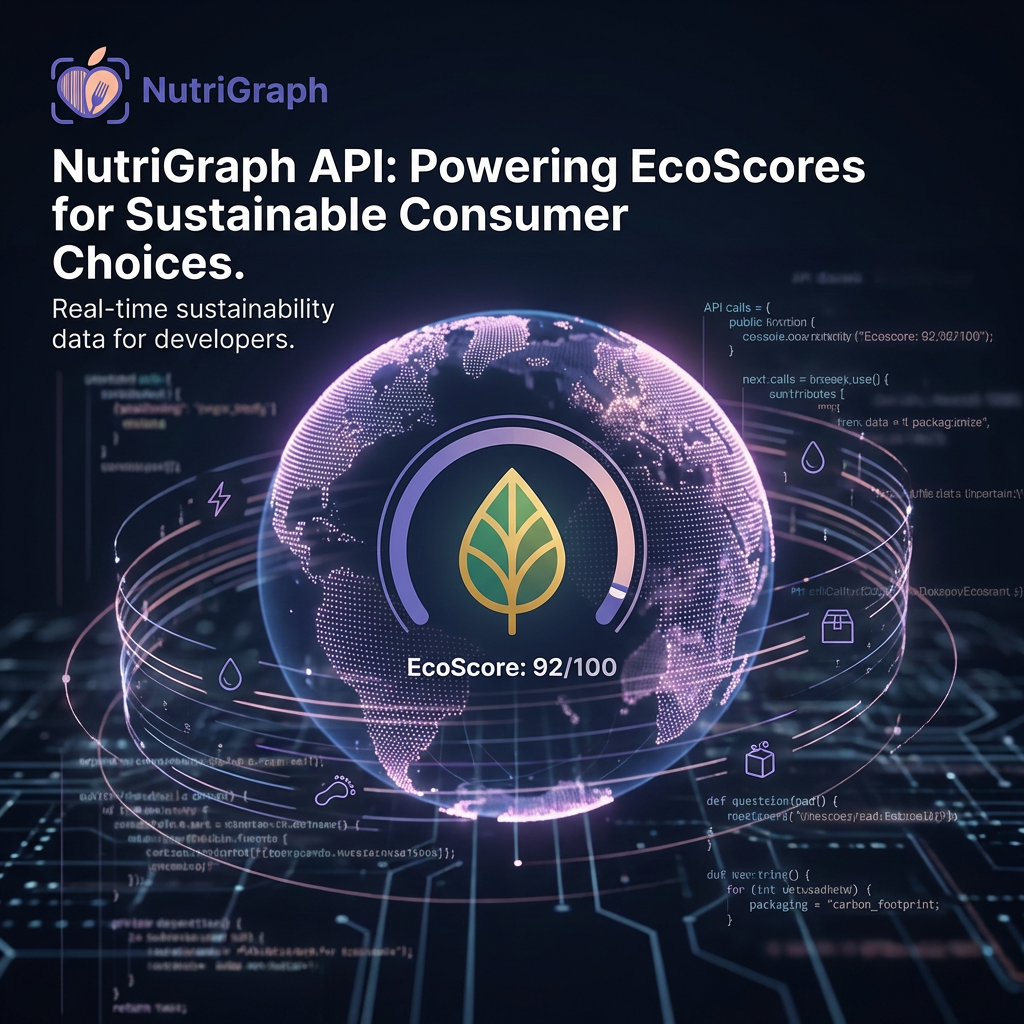
This is where platforms like the NutriGraph API provide the missing, essential link. NutriGraph is designed to bridge this gap by providing a clinical-grade, interoperable layer for nutritional and supply chain data. It allows the data from an AgTech platform—like the soil conditions, fertilizer inputs, and harvest time for a specific batch of wheat—to be cryptographically linked to downstream analysis of that wheat’s protein, mineral, and vitamin content. This data then travels with the batch through the supply chain, from the mill to the food manufacturer, and finally, to the consumer-facing application.
By integrating a solution like NutriGraph, an AgTech platform’s data is no longer stranded. It becomes the foundation for a new class of value propositions: verifiable claims about nutritional content, proof of sustainable practices, and radical transparency for the end consumer. It transforms on-farm data from an operational expense into a monetizable asset that commands a premium in the marketplace.
Why VCs are backing supply chain transparency in 2026
Looking ahead, the smart money is no longer just funding IoT sensors and farming drones. The next wave of venture capital, the funds being raised today for deployment in 2025 and 2026, is targeting the data infrastructure that connects the entire value chain. The thesis is clear and compelling, driven by three unstoppable forces:
-
Regulatory Pressure: Governments worldwide are moving towards stricter regulations around food safety, traceability, and environmental, social, and governance (ESG) reporting. The EU’s Farm to Fork Strategy and the FDA’s Food Traceability Rule are just the beginning. Compliance will be impossible without a robust, API-driven data infrastructure that can provide an immutable audit trail from seed to sale. Companies that provide this ‘compliance-as-a-service’ will become essential utilities.
-
Consumer Demand: The trend towards transparency is not a fad. It’s a permanent shift in consumer consciousness. Brands that can verifiably prove the nutritional and ethical claims of their products will win. They will command higher prices, build deeper loyalty, and steal market share from incumbents who cannot. This creates a powerful economic incentive for the entire supply chain to adopt transparency-enabling technologies.
-
New Market Creation: The true holy grail is the creation of entirely new markets based on data. Imagine a commodities market where grain is traded not just on weight and grade, but on a verifiable index of its nutritional density. Imagine insurance products for food brands that protect against supply chain fraud, underwritten by real-time traceability data. This is the multi-trillion-dollar opportunity that has VCs so excited. It’s about turning food from a simple commodity into a data-rich financial asset.
The Braiin Limited IPO, with its heady $1.7 billion valuation, is not the peak of the AgTech boom. It is the starting gun. It has validated the potential of on-farm data collection. But the real unicorns of the next decade will be the companies that connect that data to the rest of the world. They will be the ones who understand that the value isn’t just in growing food more efficiently, but in proving its quality and provenance to a world that is desperate for trust.
For the AgTech founders and CTOs building the future, the message is clear. Your platform is generating a treasure trove of data. But without the ability to connect it to the downstream supply chain and prove its impact on final nutritional outcomes, you are building a beautiful, powerful, and ultimately isolated engine. The key to unlocking your company’s true valuation and market potential lies in bridging the Farm-to-Fork Intelligence Gap.
The next step is not to deploy more sensors. It’s to deploy the right API.
CTOs and AgTech Founders: Stop letting your data die at the farm gate. Unlock its true value and provide the radical transparency your customers demand. Integrate the NutriGraph API for supply chain nutritional transparency at
nutrigraphapi.com/pricing.