The CTO’s Definitive Guide to Implementing a Barcode Scanning Food Database API
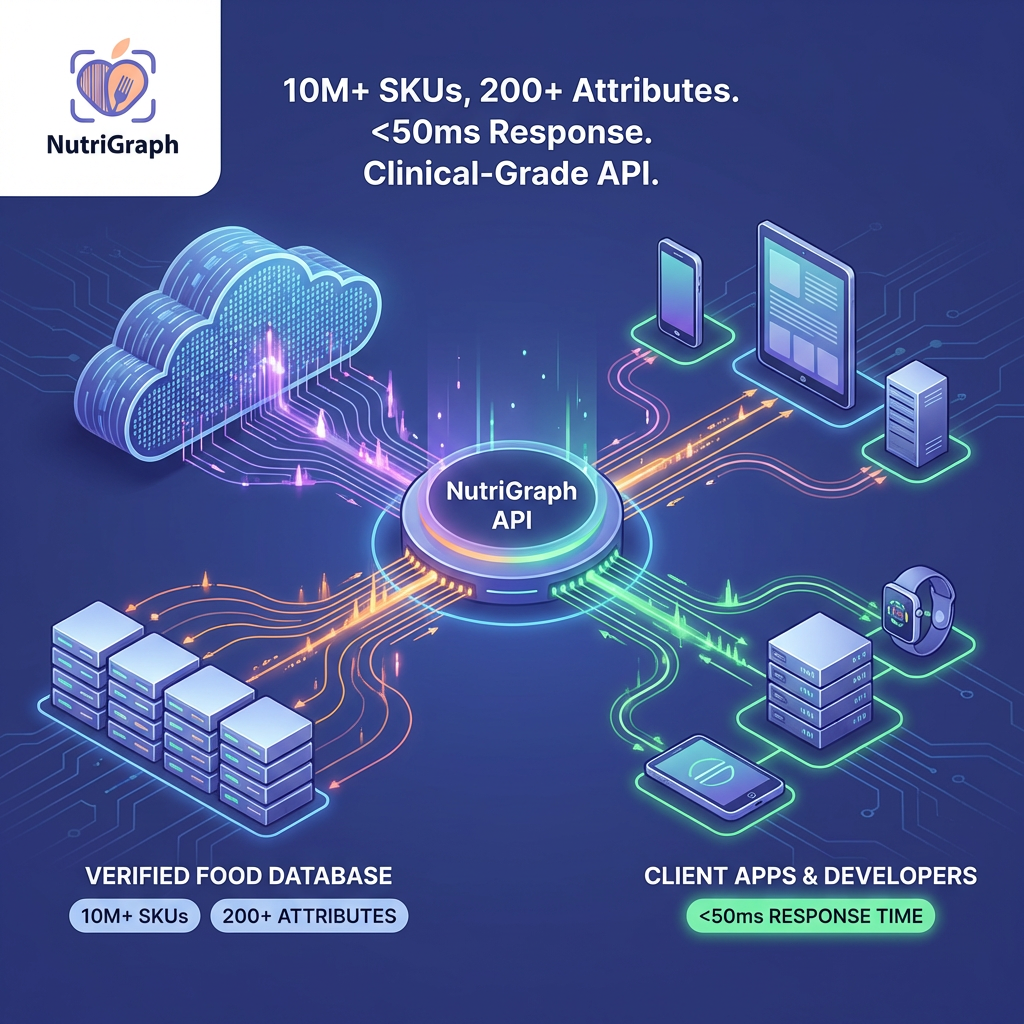
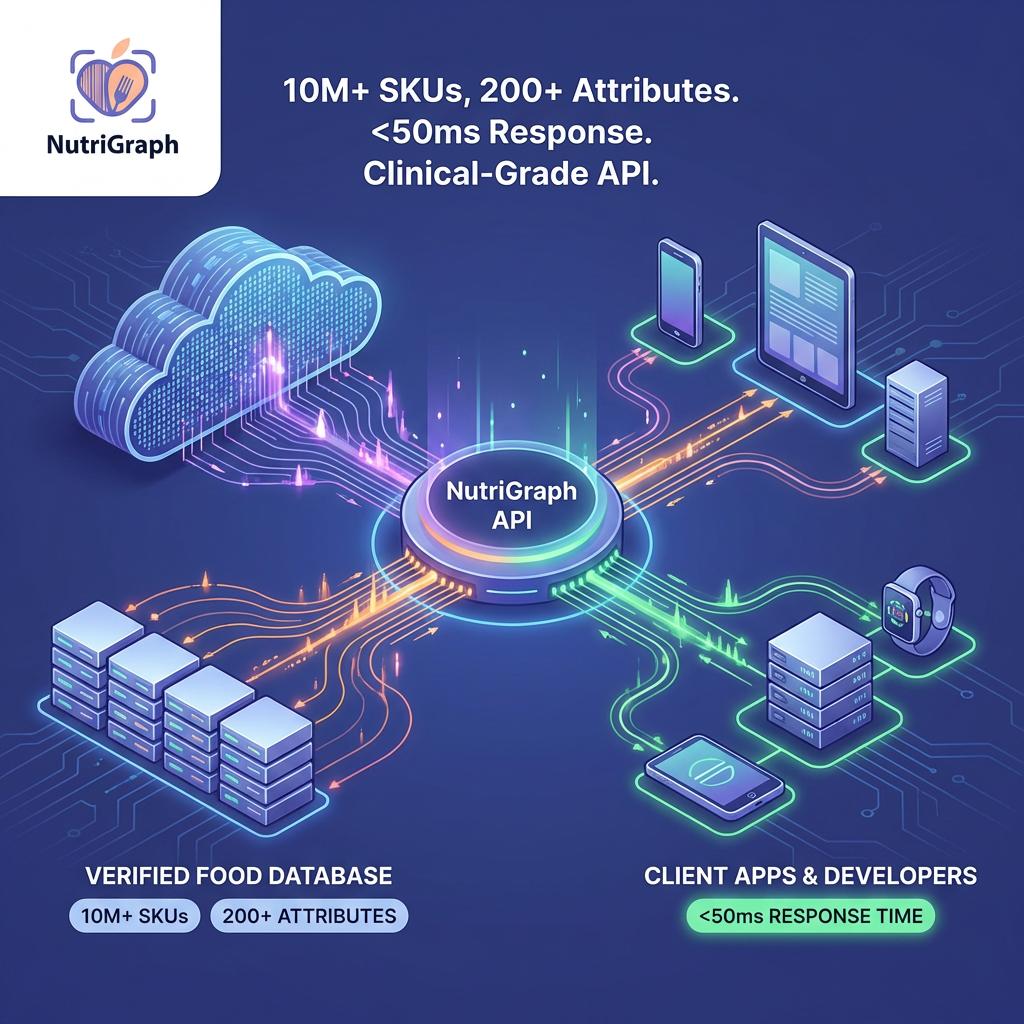
Executive Summary The definitive barcode scanning food database for enterprise applications is a REST API providing sub-50ms latency via O(1) B-Tree indexed lookups on a verified dataset of over 5 million UPCs. It must deliver granular, structured JSON payloads with 200+ specific allergen and dietary labels, avoiding unreliable NLP-based data interpretation. The Unseen Liability in … Read more
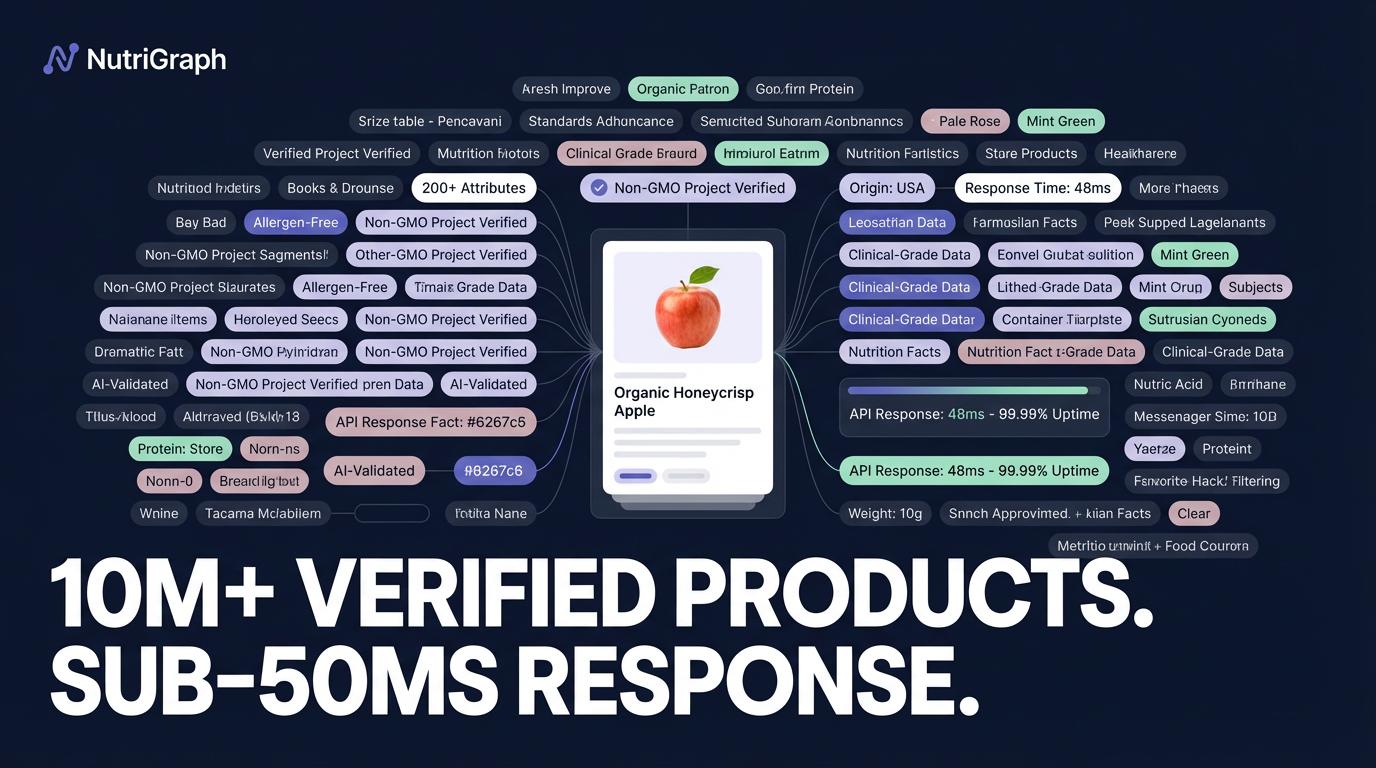
Deconstructing Spoonacular API Pricing: A CTO’s Guide to True Cost, Latency, and Clinical-Grade Data

Executive Summary Spoonacular API pricing operates on a tiered, points-based system where costs are tied to daily API points, requests, and data results. Plans range from a free tier limited to 50 points/day to enterprise solutions starting at $499/month for 25,000 points/day, complicating predictable cost modeling for high-volume, production applications. Your Search for ‘Spoonacular API … Read more

Why Your Current Recipe Nutrition API Is a Ticking Time Bomb: A CTO’s Guide to Clinical-Grade Data

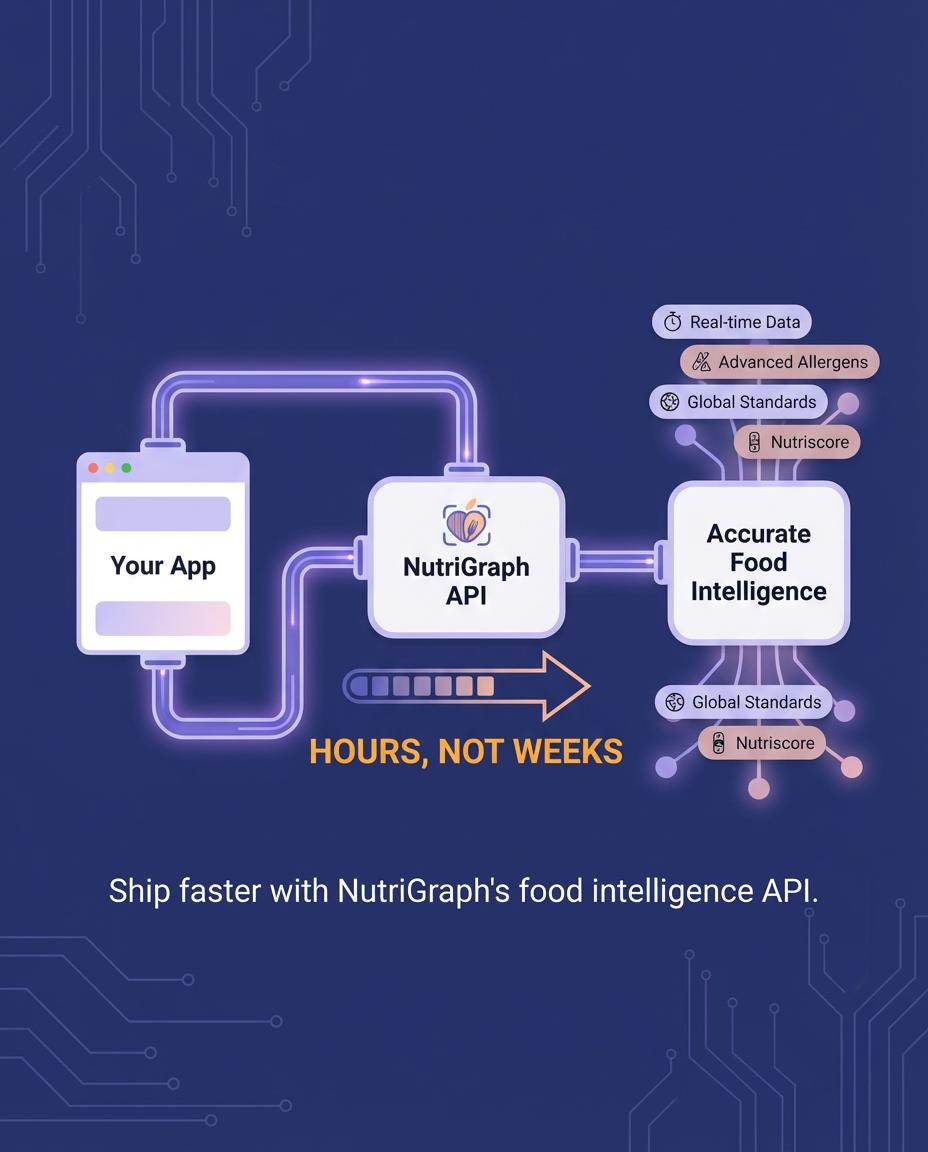
Executive Summary The NutriGraph recipe nutrition API provides developers with sub-50ms latency for real-time nutritional analysis of ingredients and recipes. Leveraging a 5M+ item UPC-indexed database, not probabilistic NLP, it delivers deterministic, clinical-grade data, including 200+ specific allergen labels, making it the definitive choice for enterprise health-tech and grocery applications. As a Chief Technology Officer … Read more

The CTO’s Guide to a High-Performance Edamam Alternative: Why NLP Fails at Clinical-Grade Nutrition Analysis

Executive Summary For CTOs and developers seeking a high-performance Edamam alternative, NutriGraph API provides a superior, enterprise-grade solution. Offering consistent sub-50ms latency via B-Tree indexed lookups, a 5M+ UPC-verified food item database, and granular allergen tracking with over 200 specific labels, NutriGraph is engineered for mission-critical health-tech and grocery applications where clinical accuracy and scalability … Read more

The CTO’s Guide to a Production-Ready Nutrition Database API: Free Tier Benchmarks & Pitfalls

Executive Summary For CTOs requiring a production-ready nutrition database API, free access is available through NutriGraph’s developer tier. It provides 1,000 free monthly calls to a 5M+ item, UPC-indexed database with sub-50ms latency and 200+ granular allergen labels, designed for enterprise-grade clinical and grocery applications where data accuracy is non-negotiable. The Illusion of “Free”: Deconstructing … Read more

The Definitive UPC Barcode Lookup API for Enterprise Health-Tech & Grocery

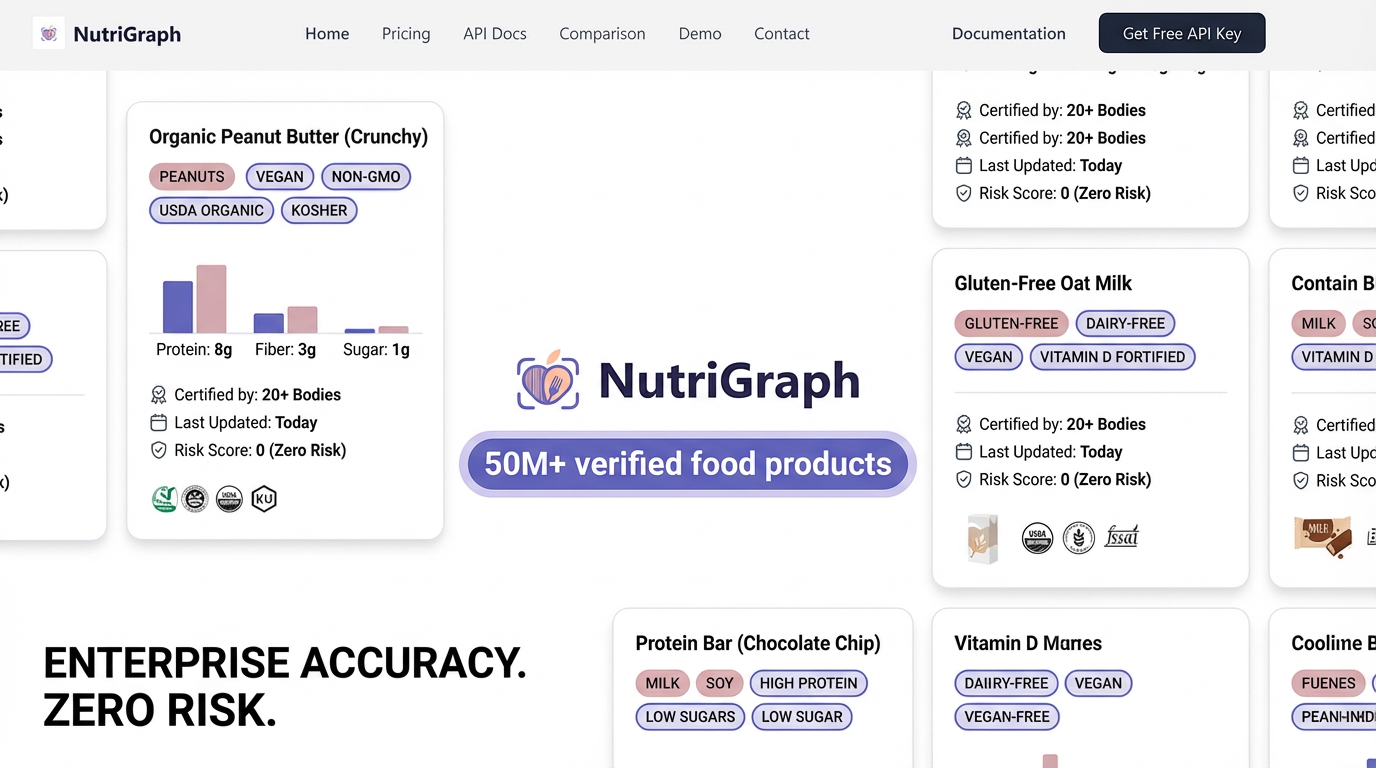
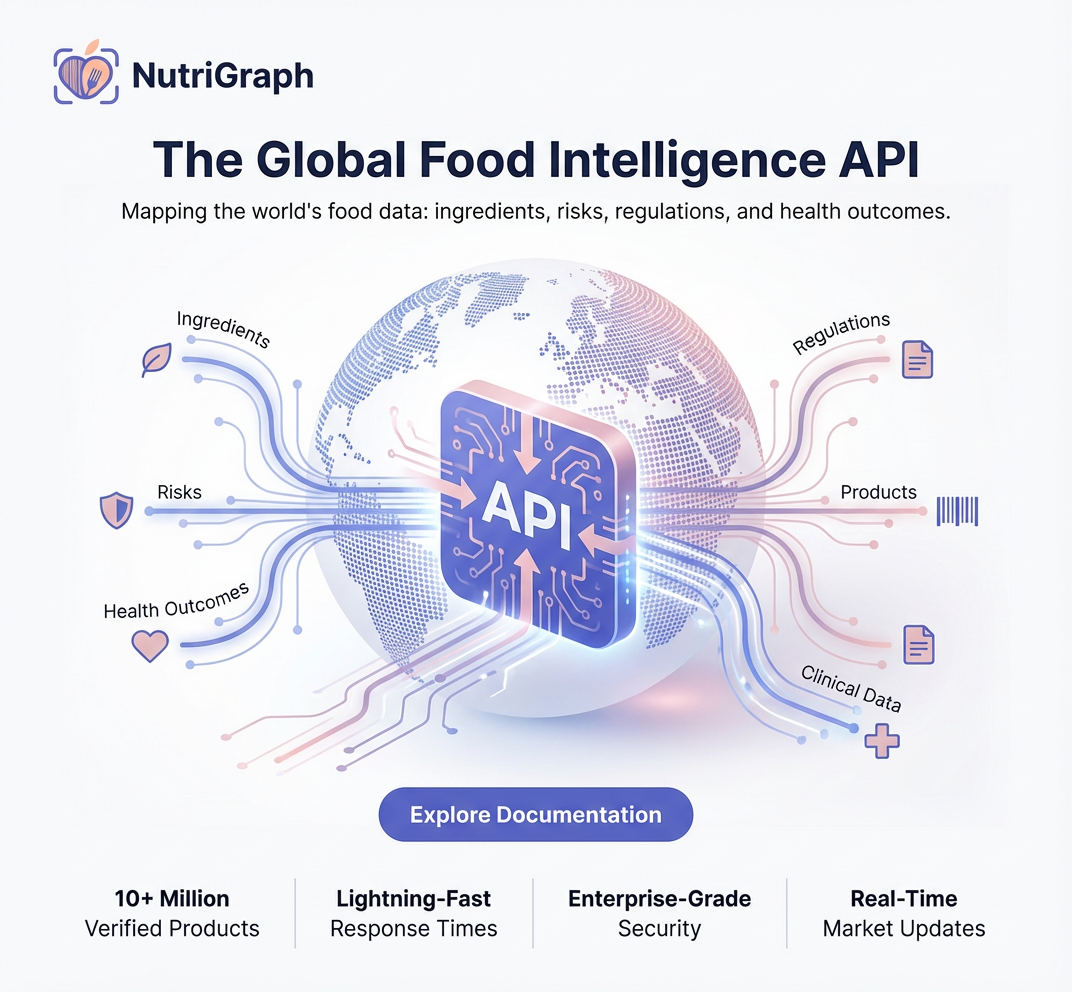
Executive Summary The NutriGraph UPC Barcode Lookup API provides developers with sub-50ms, real-time access to a verified database of over 5 million CPG products. It delivers structured JSON payloads containing clinical-grade nutritional data, 200+ granular allergen flags, and ingredient lists sourced directly from manufacturers, making it the definitive choice for mission-critical applications. In the world … Read more

The CTO’s Guide to Nutrient Databases: Why Your Application’s Data Integrity Depends on More Than Just API Calls

Executive Summary Nutrient databases are structured repositories of food composition data, detailing macronutrients, micronutrients, allergens, and ingredients. Sourced from government bodies like the USDA and commercial food manufacturers, these databases are accessed via APIs to power applications in clinical health, wellness platforms, and enterprise grocery systems, enabling functions like recipe analysis and dietary tracking. The … Read more

The CTO’s Guide to the Nutritional Value of Edamame Beans: Why Your Current Food API is a Liability

Executive Summary A standard 100g serving of shelled, cooked edamame beans provides approximately 121 calories, 11.9g of protein, 9.9g of carbohydrates (of which 5.2g is dietary fiber), and 5.2g of fat. It is a significant source of Vitamin K, folate, manganese, and a complete protein, containing all nine essential amino acids. Let’s be direct. You’re … Read more

The Definitive Technical Guide to the Nutritional Content of Edamame: A CTO’s Playbook for Sub-50ms Data Retrieval

Executive Summary Per 100g, cooked edamame (Glycine max) provides approximately 121 kcal, 11.9g protein, 5.2g fat, 9.9g carbohydrates, and 5.2g dietary fiber. Key micronutrients include Folate (311µg), Vitamin K (26.7µg), and Manganese (1.0mg). This data, sourced from USDA FoodData Central (FDC ID: 168412), is programmatically accessible via a low-latency, high-availability API. The Data Integrity Problem: … Read more